The Scene2Model Scenario Scanner is a hybrid physical-digital design thinking environment that enables groups to collaboratively create and transform tangible, physical visualisations of scenarios into digital models that can be further analysed, enriched, or integrated with enterprise modelling tools. It’s part of a broader effort to bridge creative co-design processes with conceptual modelling.
The live view of the digitalisation results can be found below
Image Processing
Image Recognition
Views and Experiences
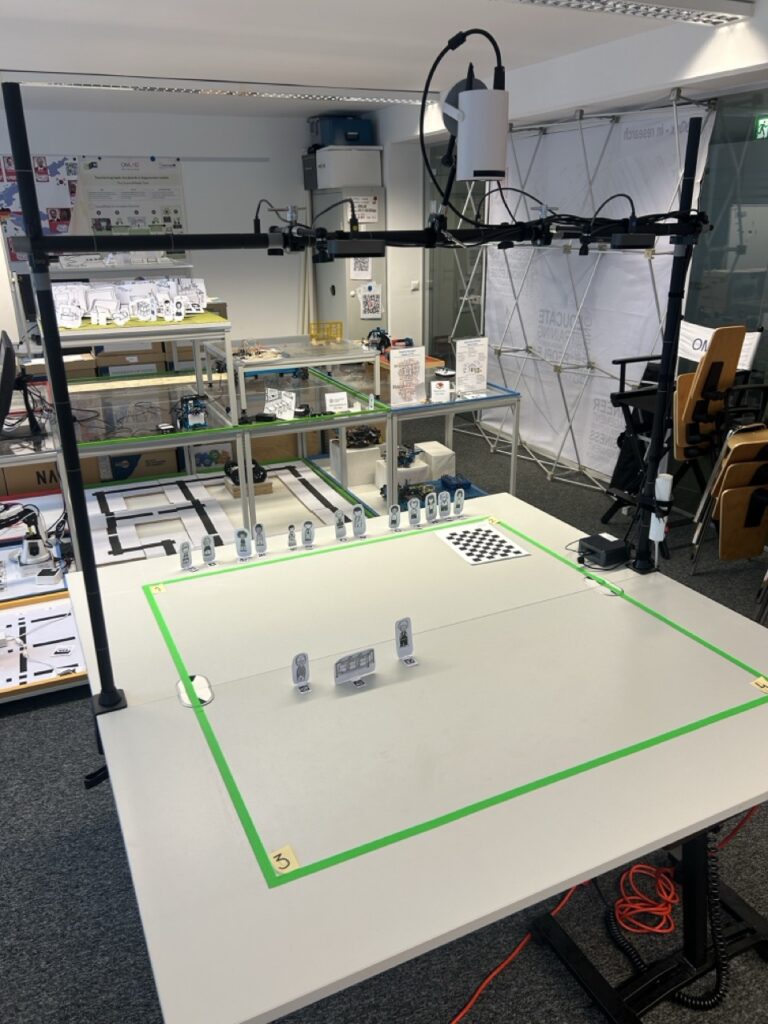
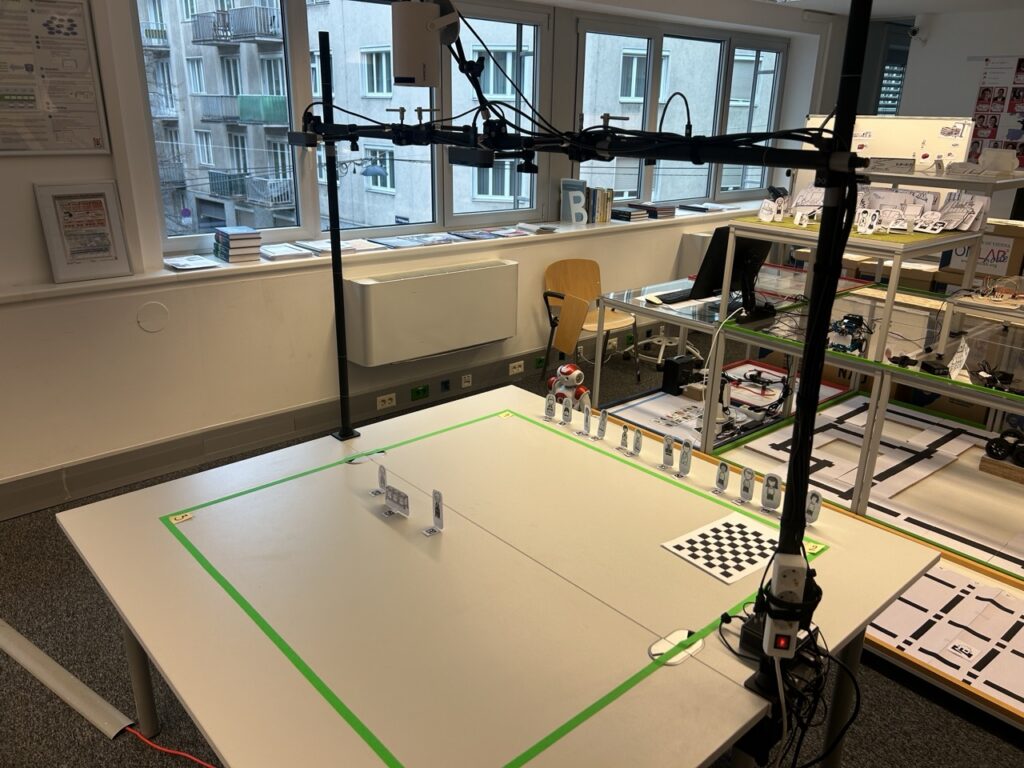
Originally developed within research projects this environment helps connect in-room collaborative activities with digital knowledge artefacts, supporting various scenarios such as design thinking in teams, scenario analysis, knowledge extraction and the like.
The deployed Scene2Model Scenario Scanner is installed at the OMilAB@BOC in Faulmanngasse integrates with the Scene2Model platform. The digitalisation results are accessible online via https://scanner.lab.boc-group.eu/. The setup includes a system of 4 cameras that are sychronized to capture the work results of larger teams and enable concurrent settings.
Related Resources
- Scene2Model Tool Download: https://scene2model.omilab.org/
- Scene2Model Domain-Specific Libraries: https://scene2model.omilab.org/documentation/03_domain_specific_libraries/06_example_libraries.html
- Publications:
- Müller, M.P., Goeth, C. (2026). The Disruption of Customer-Facing Processes Through IoT in the Construction Industry: Development of a Domain-Specific Conceptual Modelling Approach Using Design Thinking with Scene2Model. In: Boucher, X., Buchmann, R.A., Fill, HG., Kyritsis, D., Utz, W. (eds) Domain-Specific Conceptual Modeling. Springer, Cham. https://doi.org/10.1007/978-3-031-98660-4_13, OMiLAB Link
- Muck, C., Palkovits-Rauter, S. (2022). Conceptualizing Design Thinking Artefacts: The Scene2Model Storyboard Approach. In: Karagiannis, D., Lee, M., Hinkelmann, K., Utz, W. (eds) Domain-Specific Conceptual Modeling. Springer, Cham. https://doi.org/10.1007/978-3-030-93547-4_25, OMiLAB Link
- Miron, E.-T., Muck, C., Karagiannis, D., Götzinger, D. (2018). Transforming Storyboards into Diagrammatic Models. In: Stapleton, G., Bellucci, F., Moktefi, A., Chapman, P., Perez-Kriz, S. (eds) Diagrammatic Representation and Inference. Diagrams 2018. Lecture Notes in Computer Science, vol 10871. Springer, Cham.
- Muck, C., Miron, E.-T., Karagiannis, D., Moonkun, L. (2018). Transforming storyboards into diagrammatic models: The Scene2Model Tool. In: Joint International Conference of Service Science and Innovation (ICSSI2018) and Serviceology (ICServ2018), Taichung, Taiwan, Province of China.
- Miron, E.-T., Muck, C., Karagiannis, D. (2019). Transforming Haptic Storyboards into Diagrammatic Models: The Scene2Model Tool. In: Proceedings of the 52nd Hawaii International Conference on System Sciences (HICSS 2019).
- Muck, C., Utz, W. (2023). A Recognition Service for Haptic Modelling in Scene2Model. In: Martin, A., Hinkelmann, K., Fill, H.-G., Gerber, A., Lenat, D., Stolle, R., van Harmelen, F. (eds) Proceedings of the AAAI 2023 Spring Symposium on Challenges Requiring the Combination of Machine Learning and Knowledge Engineering (AAAI-MAKE 2023). CEUR Workshop Proceedings. CEUR-WS.org.
- Voelz, A., Muck, C., Amlashi, D.M., Karagiannis, D. (2023). Bridging haptic Design Thinking and cyber-physical environments through Digital Twins using conceptual modeling. In: BIR-WS 2023: BIR 2023 Workshops and Doctoral Consortium, 22nd International Conference on Perspectives in Business Informatics Research (BIR 2023), Ascoli Piceno, Italy. CEUR Workshop Proceedings. CEUR-WS.org.
- Sumereder, A., Falcioni, D., Woitsch, R. (2024). How Scenario Building supports Conceptual Modelling. In: Joint Proceedings of RCIS 2024 Workshops and Research Projects Track, Guimarães, Portugal. CEUR Workshop Proceedings. CEUR-WS.org.
- Utz, W., Vaidian, I. (2025). Agile Business Modelling Using Digital Twins: The Scene2Model Platform for Design Thinking. In: Luković, I., Bjeladinović, S., Delibašić, B., Barać, D., Iivari, N., Insfran, E., Lang, M., Linger, H., Schneider, C. (eds) Empowering the Interdisciplinary Role of ISD in Addressing Contemporary Issues in Digital Transformation: How Data Science and Generative AI Contributes to ISD (ISD2025 Proceedings). University of Gdańsk, Department of Business Informatics & University of Belgrade, Faculty of Organizational Sciences, Belgrade, Serbia.